
01
Existing siding removal
Old siding stripped to sheathing. Sheathing inspected for rot, water damage, or improper prior repairs. Damage addressed before new siding goes up.
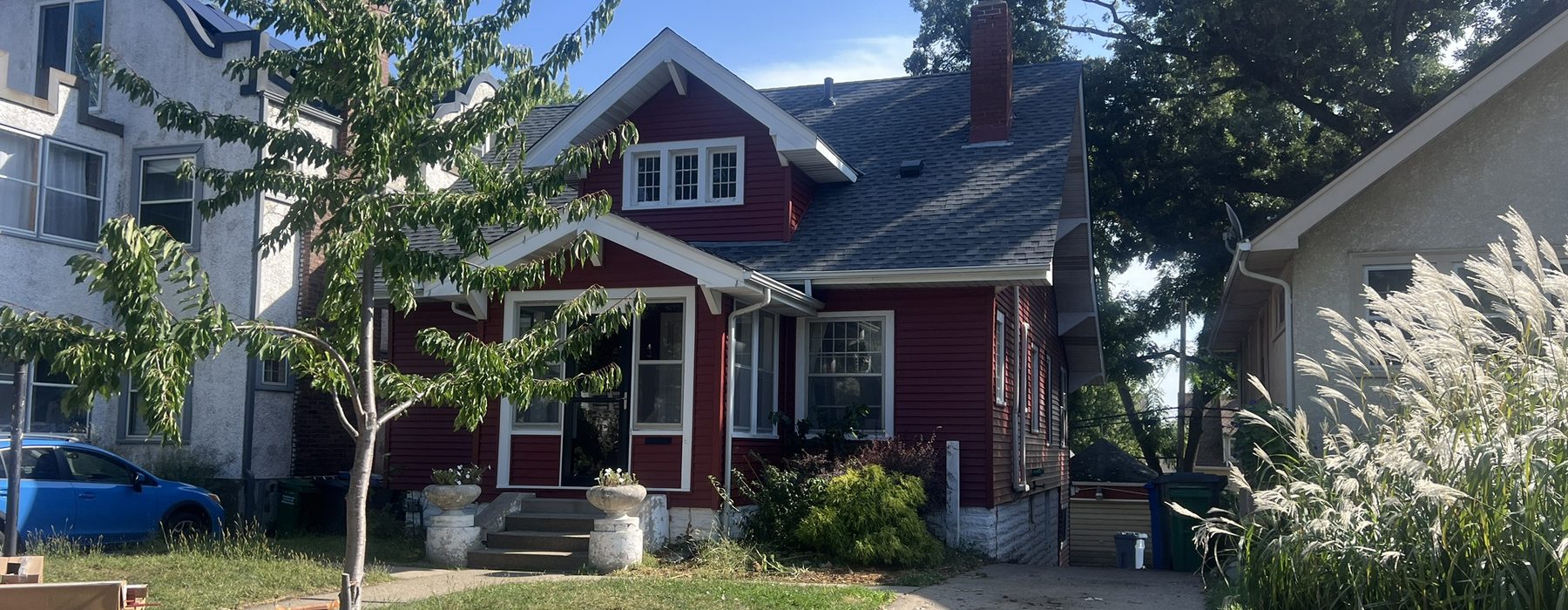
Siding installation done with the same care we put into the field as into the trim and fascia. Engineered wood, fiber cement, vinyl, and steel — specified to suit the home and the weather.
Siding installers are easy to find. Siding installers who do the trim, fascia, and flashing details to the same standard as the field — much harder. Most siding failures we see aren't in the panels themselves; they're at the joints, corners, around windows, and at the soffit-to-wall transition. Where the material meets something else is where water gets in.
We treat the trim as part of the siding spec, not an afterthought. J-channels properly cut and overlapped, corner posts caulked at the right points (and not at the wrong ones — siding needs to be able to expand), drip edge at the top of windows, and flashing where the siding meets the roof. The field of the wall is the easy part.
Every project quote is itemized. Here's what tends to be in scope on a typical project.
Old siding stripped to sheathing. Sheathing inspected for rot, water damage, or improper prior repairs. Damage addressed before new siding goes up.
House wrap installed and properly lapped. Flashing applied at windows, doors, and any roof-to-wall transitions per manufacturer spec.
Some siding systems benefit from rain-screen furring or rigid foam insulation. Specified based on the home's existing wall construction.
Starter strip leveled, courses kept plumb and consistent, manufacturer-spec exposure maintained. No shortcuts on overlap or fastener pattern.
Corner posts, window trim, fascia, and soffit detailing all done to match the siding. Caulking applied where appropriate, omitted where the siding needs to breathe.
Site cleaned, leftover material removed, walkthrough with you to inspect details. Touch-up paint and warranty paperwork provided.
We prefer engineered wood (LP SmartSide) for most projects — it offers wood-grain aesthetics and strong durability with workable installation and a fair price point. Fiber cement (CertainTeed) is an alternative for projects that need maximum lifespan and impact resistance, at a higher price. Vinyl and steel siding are also options where budget is the priority or the architecture calls for them. We recommend based on budget, architectural style, and how long you plan to be in the home.
For a typical 2,000–3,000 sq ft home, a full siding replacement takes one to two weeks weather-permitting. Engineered wood and fiber cement installations run longer than vinyl or steel due to more complex installation. We schedule starts when the weather forecast supports completing the work without rain interruptions.
Some, especially if we add rigid foam insulation behind the new siding. Without added insulation, siding alone is a modest energy improvement — house wrap and proper flashing matter more for air sealing than the siding itself. We can quote with or without added insulation.
Yes — we strongly recommend it. Replacing siding without also replacing trim and fascia creates a mismatched look and leaves the weakest parts of the system (the joints) on the home. Our standard scope includes trim, fascia, and soffit work alongside the siding.
A few details now and we can have a written estimate scheduled for next week. We respond to inquiries within one business day.
Complete the form and we’ll be in touch within one business day.